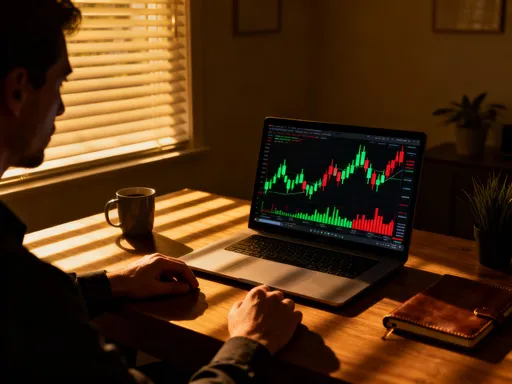
How I Navigate Market Trends to Protect and Grow My Financial Goals — A Professional’s Real Talk
Every investor wants to grow wealth, but few talk about how messy it really gets when market trends shift overnight. I’ve been there—watching plans wobble as volatility hits. Over time, I learned it’s not about chasing returns, but aligning strategy with real financial goals. This is how I stay focused, manage risk, and make practical moves without panic. No hype, just what actually works in the trenches of financial reality. Markets will always fluctuate, but the key difference between those who endure and those who falter lies not in predicting every turn, but in building a framework that withstands uncertainty. This is not a story of overnight success or miraculous gains. It is a reflection on the disciplined, often quiet choices that protect capital, nurture growth, and sustain peace of mind through changing economic seasons.
The Wake-Up Call: When Market Shifts Exposed My Weak Planning
There was a time when I believed that simply putting money into the stock market was enough. I had a diversified portfolio, sure, and I read financial news regularly, but my approach lacked depth. I assumed that long-term growth was guaranteed as long as I stayed invested. Then came the sharp correction of 2018, followed by the turbulence of early 2020. Watching my portfolio dip by nearly 20 percent in a matter of weeks was a sobering experience. More than the financial loss, it was the emotional toll that shook me. I found myself checking my account daily, second-guessing decisions, and feeling a persistent sense of unease. That period exposed a critical flaw: I had no clear financial goals to anchor my strategy. I was investing without a destination, reacting to market noise instead of acting on a well-defined plan.
It became clear that my earlier mindset—focused solely on returns—was fundamentally flawed. I had not considered how much risk I was truly comfortable with, nor had I mapped out what I was investing for. Was it retirement? A home purchase? Education for my children? Without these answers, every market dip felt like a personal failure. The turning point came when I sat down and wrote out my financial objectives in detail. I listed time horizons, estimated costs, and prioritized each goal. This simple act transformed my perspective. Suddenly, market movements were no longer personal verdicts on my worth as an investor, but data points to be evaluated within a broader context. The emotional volatility began to subside because I had a reference point—my goals—that remained steady even when markets did not.
This shift in thinking was not just psychological; it had practical implications. I began to structure my investments around specific objectives rather than vague aspirations. For example, I separated funds intended for short-term needs—like a planned home renovation—from those meant for long-term growth, such as retirement savings. This allowed me to assign appropriate risk levels to each bucket. Short-term goals were placed in more stable, income-generating assets, while long-term goals could tolerate more volatility in pursuit of higher returns. The experience taught me that resilience in investing does not come from avoiding losses, but from having a plan robust enough to absorb them without derailing progress.
Defining What Truly Matters: Aligning Investments with Core Financial Goals
Once I moved past the idea of simply “beating the market,” I began to ask more meaningful questions. What am I really saving for? How much do I need, and by when? What level of risk am I willing to accept to get there? These questions formed the foundation of goal-based investing, a strategy that has since become central to my financial discipline. Unlike traditional approaches that focus on benchmarks like the S&P 500, goal-based investing centers on personal outcomes. It shifts the focus from relative performance to absolute progress toward specific life milestones. This change in orientation made decision-making clearer and less reactive. Instead of wondering whether I should sell because the market was down, I could assess whether my goals were still on track based on my time horizon and cash flow needs.
For instance, when planning for my child’s college education, I calculated the estimated future cost based on current tuition rates and projected inflation. I then determined how much needed to be saved annually to meet that target. With that number in hand, I selected investment vehicles that balanced growth potential with capital preservation—primarily low-cost index funds and education savings accounts with tax advantages. Because the goal had a fixed timeline, I structured a glide path that gradually reduced equity exposure as the target date approached. This approach eliminated the temptation to chase high-risk opportunities in a last-minute effort to make up for lost ground. The clarity of purpose made it easier to stay the course, even during periods of market stress.
Similarly, for retirement, I used a combination of employer-sponsored plans, individual retirement accounts, and taxable brokerage accounts, each allocated according to risk capacity and time horizon. I set a target replacement rate—aiming to cover 70 to 80 percent of my pre-retirement income—and worked backward to determine how much I needed to save annually. This long-term view allowed me to embrace market fluctuations as part of the process rather than disruptions to be feared. By anchoring decisions to tangible goals, I reduced the influence of emotion and speculation. The result was a more consistent, intentional approach that prioritized stability and progress over short-term gains.
Reading the Signals: How I Interpret Market Trends Without Overreacting
Markets generate a constant stream of information—earnings reports, economic data, geopolitical events, and analyst commentary. In the past, I tried to follow it all, believing that more information would lead to better decisions. What I discovered, however, was the opposite: information overload led to confusion and impulsive reactions. I’ve since learned to filter out the noise and focus on a few key indicators that truly matter. These include broad economic cycles, interest rate trends, sector performance, and market sentiment. I don’t attempt to predict the future, but I do look for patterns that suggest shifts in the underlying environment. This allows me to adjust my strategy gradually, rather than in panic-driven bursts.
One of the most reliable signals I monitor is the business cycle. By understanding whether the economy is expanding, peaking, contracting, or recovering, I can make more informed asset allocation decisions. During expansion phases, I tend to favor equities, particularly in cyclical sectors like technology and consumer discretionary. As signs of overheating appear—such as rising inflation or tightening monetary policy—I begin to increase exposure to defensive sectors like utilities and healthcare. When a contraction is evident, I prioritize capital preservation by shifting toward high-quality bonds and cash equivalents. This cyclical approach does not require perfect timing; it simply involves recognizing the general direction of the economy and adjusting accordingly.
Another critical signal is interest rate movement. Central bank policy has a profound impact on asset valuations, particularly for bonds and growth-oriented stocks. When rates are low, I am more willing to accept duration risk in fixed income and allocate to growth equities. When rates begin to rise, I shorten bond maturities and reduce exposure to high-multiple stocks that are sensitive to discount rate changes. I also pay attention to credit spreads—the difference in yield between corporate bonds and government bonds—as a measure of market stress. Widening spreads often signal increasing risk aversion, which can precede broader market corrections. By tracking these indicators over time, I gain a clearer picture of the macro environment without falling into the trap of overtrading.
Building a Defense: Risk Control as the Foundation of Growth
For years, I viewed risk control as a constraint—a necessary evil that limited upside potential. I wanted growth, not protection. That mindset changed after a concentrated position in a single stock lost significant value due to an unexpected earnings miss. The loss was not catastrophic, but it was avoidable. More importantly, it revealed a lack of discipline in my risk management. I had allowed a single holding to grow too large, violating basic principles of diversification. That experience led me to rebuild my approach around risk as the foundation of sustainable investing. I now treat capital preservation not as a secondary concern, but as the primary objective. Without protecting what I have, long-term growth is impossible.
One of the most effective tools I use is diversification across asset classes, sectors, and geographies. I maintain exposure to U.S. and international equities, fixed income, real estate, and alternative assets like commodities. This reduces the impact of any single market segment underperforming. Within equities, I avoid overconcentration in any one industry or company. I set position limits—no single stock exceeds 5 percent of my portfolio, and no sector exceeds 20 percent—unless there is a compelling, well-documented reason to deviate. These constraints prevent emotional decisions from turning into large, unbalanced bets. Diversification does not eliminate risk, but it does reduce the likelihood of catastrophic loss from a single event.
In addition to diversification, I use position sizing to manage risk at the individual investment level. I determine the size of each holding based on its volatility and correlation to the rest of the portfolio. Higher-risk assets receive smaller allocations, while more stable investments can be weighted more heavily. I also apply a mental stop-loss discipline—when an investment thesis breaks down or fundamentals deteriorate, I reassess the position promptly rather than holding out for a rebound. This is not about timing the market, but about respecting the limits of my assumptions. By controlling risk at both the portfolio and individual levels, I create a structure that can endure volatility without requiring constant intervention.
The Quiet Engine of Wealth: Why Consistent Gains Beat Home Runs
Early in my investing journey, I was drawn to the idea of the “big win”—a single stock that would multiply in value and transform my financial life. I chased momentum plays, speculative IPOs, and high-flying sectors, often under the guise of “opportunity.” While I occasionally caught a winner, the overall result was underperformance and increased stress. I realized that my focus on outsized gains was undermining the very consistency needed for long-term success. True wealth accumulation, I learned, is not built on home runs but on a steady series of disciplined, rational decisions that compound over time.
I shifted my strategy to prioritize consistent, manageable returns. Instead of seeking 50 or 100 percent gains in a year, I aim for 6 to 8 percent annually through a diversified mix of equities, dividends, and interest income. This may seem modest, but over decades, it produces substantial results. At an 8 percent annual return, money doubles approximately every nine years. Over a 30-year horizon, a disciplined investor can grow wealth eightfold. The power lies not in the rate itself, but in its sustainability. By avoiding the pitfalls of speculation—such as leverage, market timing, and emotional trading—I increase the odds of achieving that return consistently.
Reinvesting dividends and interest has been a critical component of this approach. Rather than spending distributions, I automatically reinvest them to buy more shares or bonds. This accelerates compounding, particularly in tax-advantaged accounts where gains can grow uninterrupted. I also focus on minimizing costs—using low-fee index funds, avoiding excessive trading, and optimizing tax efficiency. These small advantages may seem insignificant in isolation, but over time, they add up. A 1 percent reduction in fees can increase final portfolio value by 20 to 30 percent over 30 years. By embracing consistency over excitement, I’ve built a strategy that grows steadily, even when individual years are flat or negative.
Tools and Habits That Keep Me on Track
Success in investing is not just about what you own, but how you manage it. I’ve found that simple, repeatable habits are more valuable than complex strategies. One of the most effective is the quarterly portfolio review. Every three months, I assess performance, rebalance if necessary, and confirm that my allocations still align with my goals. This routine prevents drift—where market movements gradually shift the portfolio away from its target—and ensures that I remain intentional about risk. I also review my financial goals to see if life changes—such as a new job, a child’s education timeline, or a shift in income—require adjustments to my plan.
Another habit I’ve adopted is decision journaling. After making any significant investment decision, I write down the rationale, expected outcome, and key assumptions. This practice serves multiple purposes. It creates accountability, forces me to think through decisions more thoroughly, and provides a record for future review. When a decision works out well, I can assess whether it was due to skill or luck. When it fails, I can identify what went wrong and learn from it. Over time, this has helped me recognize behavioral patterns—such as overconfidence during bull markets or excessive caution after losses—that can distort judgment.
I also use a simple tracking system to monitor progress toward my financial goals. I maintain a spreadsheet that shows current balances, projected growth, and expected shortfalls or surpluses. This visual representation keeps me focused on the long-term picture and reduces the temptation to react to short-term market swings. Additionally, I automate as much as possible—regular contributions to retirement accounts, dividend reinvestment, and bill payments—to reduce friction and ensure consistency. These tools and habits do not guarantee success, but they create a structure that supports disciplined behavior and reduces emotional decision-making.
Staying Human in a Data-Driven World
Investing is often portrayed as a purely rational activity, governed by numbers and algorithms. But we are not machines. We feel fear, hope, greed, and regret. I’ve learned that acknowledging these emotions is not a weakness, but a necessary part of sound financial decision-making. The goal is not to eliminate emotion, but to recognize it and prevent it from overriding discipline. I do this by building in checks and balances—rules, routines, and external perspectives—that help me stay grounded when feelings run high.
One of the most effective safeguards is maintaining a written investment policy statement. This document outlines my goals, risk tolerance, asset allocation, and decision-making process. When markets turn volatile, I refer back to it as a reminder of why I made certain choices. It serves as an anchor, preventing me from abandoning a long-term strategy in the heat of the moment. I also seek feedback from trusted advisors or peers, not to get investment tips, but to test my reasoning and identify blind spots. A simple question like “Does this still align with your goals?” can prevent a rash decision.
I’ve also learned to recognize the physical and emotional signs of stress—sleeplessness, irritability, compulsive checking of account balances—and use them as early warnings. When I notice these symptoms, I step back, review my plan, and often take a break from market news. This pause allows me to regain perspective and avoid acting on impulse. By integrating self-awareness into my financial practice, I’ve built a more resilient approach—one that honors both the logic of investing and the reality of being human.
Building a Financial Path That Lasts
In the end, financial success is not measured by peak portfolio values or short-term wins, but by resilience, consistency, and peace of mind. The strategies I’ve developed—grounded in clear goals, disciplined risk management, and emotional awareness—have allowed me to navigate market cycles without losing sight of what truly matters. I’ve learned that protecting capital is not a sign of timidity, but of wisdom. That steady progress, though less glamorous than explosive gains, is far more reliable. And that the most powerful tool in investing is not a complex algorithm or insider knowledge, but a well-constructed plan followed with patience and integrity.
My journey has not been perfect. There have been missteps, moments of doubt, and periods of underperformance. But each challenge has been an opportunity to refine my approach and strengthen my discipline. I no longer measure success by how much I make in a single year, but by whether I am moving steadily toward my goals without compromising my well-being. This mindset has transformed investing from a source of anxiety into a source of empowerment. By focusing on what I can control—my behavior, my process, my goals—I’ve built a financial path that is not just sustainable, but enduring. And that, I’ve come to realize, is the real victory.