Pedal Smarter, Not Harder: My Cycling Game-Changer
You know that feeling when your legs burn, your rhythm falters, and you’re just *not* making progress—no matter how hard you pedal? I’ve been there. Cycling isn’t just about power; it’s about technique. Once I shifted focus from speed to form, everything changed—more endurance, less fatigue, real results. This isn’t about extreme fitness; it’s about moving smarter. Let’s break down the techniques that transformed my rides and can do the same for yours.
The Hidden Problem in Most Rides
Many cyclists believe that progress comes from pushing harder, riding longer, and climbing steeper hills. While effort is important, it’s only one piece of the puzzle. The truth is, most riders are unknowingly sabotaging their performance by overlooking the most fundamental element: technique. Unlike sports such as swimming or running, where form is routinely taught and corrected, cycling often gets treated as a purely aerobic activity. Riders assume that if they can turn the pedals, they’re doing it right. But research from sports biomechanics shows that inefficient movement patterns waste energy, increase injury risk, and limit long-term progress.
Consider this: studies suggest that amateur cyclists can lose up to 30% of their generated power due to poor pedaling mechanics and misaligned posture. That means nearly one-third of the effort you're putting in never translates into forward motion. Instead, it’s absorbed by unnecessary muscle tension, joint strain, or wasted motion. This inefficiency often shows up as early fatigue, sore knees, lower back discomfort, or a frustrating plateau in performance. You may be logging miles week after week, yet feel no closer to your goals. The problem isn’t your effort—it’s your technique.
What makes this issue even more insidious is that it’s invisible. Unlike a sprained ankle or a pulled muscle, poor technique doesn’t announce itself with pain right away. It accumulates silently, wearing down joints and draining energy reserves over time. A cyclist who constantly pushes big gears at low cadence, for example, places excessive strain on the quadriceps and knees, increasing the risk of tendinitis. Another rider might hunch over the handlebars, compressing the spine and restricting breathing, which limits oxygen intake and endurance. These habits feel normal because they’re repeated, but they’re far from optimal. Recognizing that cycling is a skill-based activity—not just a test of stamina—is the first step toward riding smarter.
Posture: The Foundation of Efficient Riding
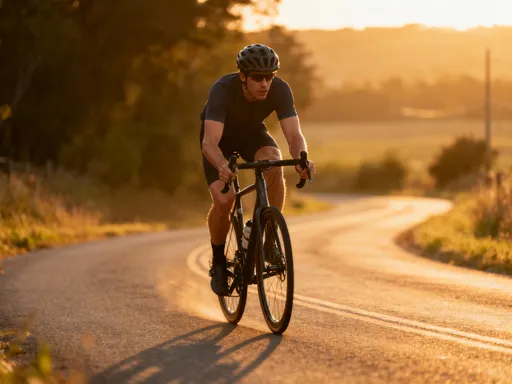
Good posture on the bike is not about looking graceful—it’s about function. Your body’s alignment directly affects how efficiently power is transferred from your legs to the pedals, how well you breathe, and how much stress your joints endure. Think of your body as a finely tuned machine: if one part is misaligned, the whole system suffers. A neutral spine, relaxed shoulders, and properly positioned hands and feet create a stable, balanced platform for sustained riding. When posture breaks down, energy leaks occur—your core wobbles, your arms tense up, and your hips rock side to side, all of which reduce efficiency and increase fatigue.
The ideal riding posture begins with the spine. A neutral spine maintains its natural curves, avoiding excessive rounding or arching. This position supports the lower back and prevents the compression that leads to chronic discomfort. To achieve this, your saddle height and handlebar reach must be adjusted to your body. If your handlebars are too low or too far forward, you’ll be forced to overreach, collapsing your chest and straining your neck and shoulders. Conversely, if they’re too high or too close, you may sit upright to the point of losing aerodynamic advantage and core engagement. The goal is a slight forward lean from the hips, with elbows bent and capable of absorbing road vibrations.
Equally important is pelvic stability. Your sit bones should rest comfortably on the saddle, with your pelvis level and stable. If your saddle is too high, you may rock side to side to reach the bottom of the pedal stroke, which fatigues the hips and lower back. If it’s too low, you restrict your range of motion and increase pressure on the knees. A simple test is to observe your hips while pedaling in front of a mirror—if they sway excessively, your saddle height or position likely needs adjustment. Small tweaks can yield significant improvements in comfort and power output. Over time, maintaining proper posture becomes second nature, turning what once felt like a chore into a smooth, sustainable motion.
Mastering the Pedal Stroke: Beyond Just Pushing Down
Most cyclists think of pedaling as a simple up-and-down motion—push down with one leg, then the other. But this limited view ignores the full potential of the pedal stroke. An efficient pedal stroke is circular, engaging muscles throughout the entire 360-degree rotation. Imagine scraping mud off the bottom of your shoe or pulling your heel up at the back of the stroke. These cues help activate muscles beyond the quadriceps, including the hamstrings, glutes, and calves. When you only push down, you rely heavily on a few muscle groups, leading to early fatigue and imbalances. By contrast, a smooth, rounded stroke distributes the workload more evenly, conserving energy and reducing strain.
The concept of “pedal circle” has been validated by cycling coaches and sports scientists alike. Electromyography studies show that elite cyclists generate power not just during the downstroke but also during the upstroke and transition phases. This continuous engagement creates a more fluid motion and allows for higher cadences with less perceived effort. While equipment like clipless pedals can help by allowing you to pull up on the backstroke, technique remains more important than gear. You can have the most advanced cycling shoes and pedals, but if your neuromuscular coordination is underdeveloped, you won’t reap the full benefits.
So how do you retrain your legs for a more complete stroke? One of the most effective methods is single-leg pedaling drills. By unclipping one foot and pedaling with just one leg for short intervals, you force your body to engage the full range of motion. At first, this may feel awkward or even jerky—many riders discover dead spots in their stroke where power drops off. But with consistent practice, your brain and muscles learn to fire in a more coordinated sequence. Start with 30 to 60 seconds per leg during an easy ride, gradually increasing duration as your coordination improves. Over time, this drill enhances muscle recruitment, improves pedaling efficiency, and builds a smoother, more rhythmic ride.
Cadence Control: Finding Your Sweet Spot
Cadence—the number of pedal revolutions per minute (RPM)—is a critical but often misunderstood aspect of cycling performance. Many recreational riders fall into the trap of “mashing” big gears at low cadences, believing that grinding up hills in a high resistance feels more powerful. While this may seem impressive in the moment, it places disproportionate stress on the knees and muscles, leading to faster fatigue and a higher risk of overuse injuries. The body is better suited to handle aerobic load through sustained cardiovascular effort rather than repeated muscular strain. That’s why professional cyclists often spin at cadences between 80 and 100 RPM, even on steep climbs—they preserve their legs by relying more on heart and lung capacity.
Research supports this approach. Studies have shown that maintaining a cadence within the 80–100 RPM range optimizes oxygen efficiency and reduces the accumulation of lactate in the muscles. At lower cadences (below 70 RPM), the body relies more on anaerobic energy systems, which deplete glycogen stores quickly and lead to early burnout. At higher cadences, while oxygen consumption increases slightly, the trade-off is reduced muscular fatigue and smoother power delivery. This means you can ride longer, recover faster, and maintain a steadier pace over varied terrain.
Developing cadence awareness is the first step toward improvement. Many modern bikes come equipped with basic computers or sensors that display RPM, and smartphone apps can also track this metric. Start by monitoring your natural cadence during different types of rides—flat roads, climbs, sprints. You may be surprised to find that you’re consistently pedaling at 60 RPM or lower. To gradually increase your turnover, incorporate cadence drills into your routine. One effective method is the “spin-up” interval: every 5–10 minutes during an easy ride, shift into an easier gear and gradually increase your cadence to 100–110 RPM for 30–60 seconds. Focus on staying smooth and relaxed, avoiding bouncing in the saddle. Over time, your neuromuscular system adapts, making higher cadences feel natural and effortless.
Breathing and Rhythm: Syncing Body and Bike
Breathing is often taken for granted, yet it plays a crucial role in cycling efficiency and endurance. Many riders fall into the habit of shallow, chest-based breathing, which limits oxygen intake and increases tension in the upper body. When oxygen supply is restricted, the muscles fatigue faster, and perceived effort rises. The solution lies in diaphragmatic breathing—deep, belly-driven breaths that fully expand the lungs and deliver more oxygen to working muscles. This type of breathing also activates the parasympathetic nervous system, helping to regulate heart rate and maintain calm focus during long or challenging rides.
But optimal breathing goes beyond depth—it’s also about rhythm. Coordinating your breath with your pedal stroke creates a natural cadence that stabilizes your core and improves overall efficiency. One effective technique is to inhale for three pedal strokes (six half-strokes) and exhale for three. This 3:3 pattern, or variations like 2:2 or 4:4, helps synchronize movement and respiration, reducing wasted motion and enhancing concentration. Runners and swimmers have used rhythmic breathing for decades to sustain effort over long distances; cyclists can benefit just as much.
To practice this, begin during a steady, low-intensity ride. Focus on drawing air deep into your abdomen, allowing your belly to rise with each inhale. Then, match your breath to the pedal stroke. You may find that certain gears or terrains make this easier—flat terrain with a consistent cadence is ideal for establishing the pattern. As you become more attuned, you’ll notice that your ride feels smoother, your mind clearer, and your energy more stable. This mindful approach transforms cycling from a purely physical activity into a holistic experience that connects body, breath, and motion.
Core Engagement: The Secret Power Link
While legs provide the power, the core provides the connection. Your abdominal and lower back muscles act as a bridge between your upper and lower body, stabilizing your pelvis and ensuring that every ounce of energy generated by your legs is transferred efficiently to the pedals. Without core engagement, power leaks occur—your upper body sways, your hips rock, and your handlebars wobble, all of which waste energy and increase fatigue. Yet, many riders neglect this vital area, assuming that core strength only matters for sit-ups or planks. In reality, low-level, sustained core activation is essential for smooth, controlled riding.
Think of your core as a natural support belt. When properly engaged, it creates a stable platform that allows your legs to push and pull with precision. This doesn’t mean clenching your abs tightly throughout the ride—that would lead to unnecessary fatigue. Instead, it’s about maintaining a subtle, continuous tension, similar to bracing your stomach lightly before a gentle punch. This level of engagement is enough to stabilize your torso without overworking the muscles. You can practice this by performing a quick “core check” every 10–15 minutes during a ride: gently draw your navel toward your spine, feel your lower abs activate, and notice how your upper body becomes more stable.
Over time, consistent core engagement improves balance, reduces lower back strain, and enhances pedaling efficiency. It also supports better posture, making it easier to maintain a neutral spine and relaxed shoulders. Riders who incorporate core awareness into their routine often report feeling stronger, more in control, and less fatigued—even on longer rides. And while dedicated core exercises off the bike (such as planks, bird-dogs, or dead bugs) can build foundational strength, the real transformation happens when you learn to integrate that strength into your riding form. A strong, engaged core turns your body into a unified, powerful machine.
Putting It All Together: Building a Technique-First Routine
Mastering cycling technique isn’t a one-time fix—it’s a practice. Like learning to play an instrument or perfecting a craft, improvement comes through consistent, mindful repetition. The good news is, you don’t need to overhaul your entire routine to see results. Start small: dedicate just 5–10 minutes of each ride to focused technique work. Choose one skill per session—posture, cadence, pedal stroke, breathing, or core engagement—and bring full attention to it. Over time, these micro-moments of awareness compound into lasting change.
A practical weekly plan can help integrate these techniques into your routine. Begin each ride with a 5-minute warm-up focused on posture: check your spine alignment, relax your shoulders, and ensure your hands are lightly gripping the bars. During the main part of your ride, add two or three 2-minute cadence drills, spinning at 90–100 RPM in an easy gear. Use the intervals to focus on smoothness and rhythm. Midway through, try a 3-minute single-leg pedaling drill (90 seconds per leg) to refine your pedal stroke. As you cool down, shift your attention to breathing—practice the 3:3 inhale-exhale pattern and notice how it affects your recovery.
To track progress, keep a simple journal or use voice notes after each ride. Note what felt easier, what was challenging, and any adjustments you made. Over weeks, you’ll see patterns emerge—perhaps your cadence naturally rises, or your back feels less stiff. Some riders even record short video clips of themselves pedaling (with a friend or tripod) to visually assess form. The goal isn’t perfection, but awareness and gradual improvement.
As technique becomes second nature, you’ll notice real changes: longer rides without exhaustion, faster recovery, and a deeper enjoyment of the experience. You’ll climb hills with less strain, ride farther with less effort, and feel more connected to your body. Cycling stops being a test of willpower and starts feeling like a celebration of movement. By pedaling smarter, not harder, you’re not just becoming a better rider—you’re building a healthier, more sustainable relationship with exercise. And that’s a change that lasts far beyond the bike.